

Scarborough Centre for Healthy Communities
Transforming Healthcare Access Through Intelligent Waitlist Automation
ENGAGEMENTDigital transformation, workflow automation, product design and development.
sECTORCommunity Healthcare / Health Tech
OVERVIEWScarborough Centre for Healthy Communities (SCHC) serves more than 25,000 clients annually across a complex network of community health services. Fragmented intake processes, manual triage, and time-consuming provider matching were creating administrative bottlenecks and delaying access to care.
Boardroom Labs partnered with SCHC to design and build an integrated waitlist optimization platform that connects digital intake with clinical workflows, automates routine decisions, and helps staff match patients with available providers. Within the first months of implementation, average time from referral to appointment fell from 65.1 days to 7.6 days among patients booked to date. The new workflow also reduced measured staff time by 66% and delivered an estimated 145 hours in monthly staff time savings at September's demand volume.
reduction in average referral-to-appointment time, from 65.1 days to 7.6 days.
88%
of staff time saved per month processing new client intake requests.
145 hours
of intake forms estimated to be complete and accurate, up from 40%.
80%
The ProblemSCHC's intake and waitlist processes relied on manual coordination across multiple teams and clinical systems. Staff needed to collect missing information, assess incoming requests, determine urgency, identify appropriate providers, and coordinate appointment booking. Each handoff introduced administrative effort and opportunities for delays.
As demand grew, these processes consumed valuable capacity across Central Intake, nursing, and medical secretarial teams. Incomplete forms required repeated follow-up, nurses manually assessed incoming requests, and medical secretaries spent time identifying providers with appropriate availability. Staff also needed a reliable way to track patients who did not book within their invitation window.
The challenge was to improve access without disrupting existing clinical workflows. SCHC needed a solution that could standardize intake, automate routine administrative decisions, and coordinate waitlist management while preserving clinical judgment and staff oversight where required.
What We Built-
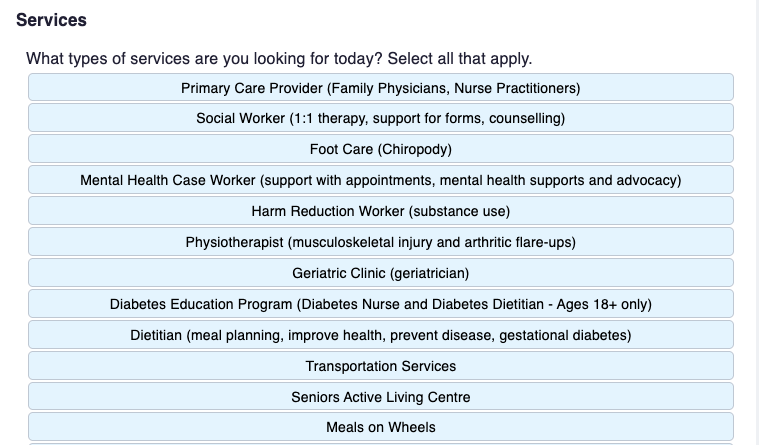
We designed a standardized digital intake experience using Ocean, allowing clients to register for services online and submit the information needed to initiate the intake process. Submitted requests flow into the waitlist workflow, reducing manual data entry and the need to chase missing information. The standardized form also creates a more consistent foundation for assessing incoming requests and directing them through the appropriate service pathways.
-
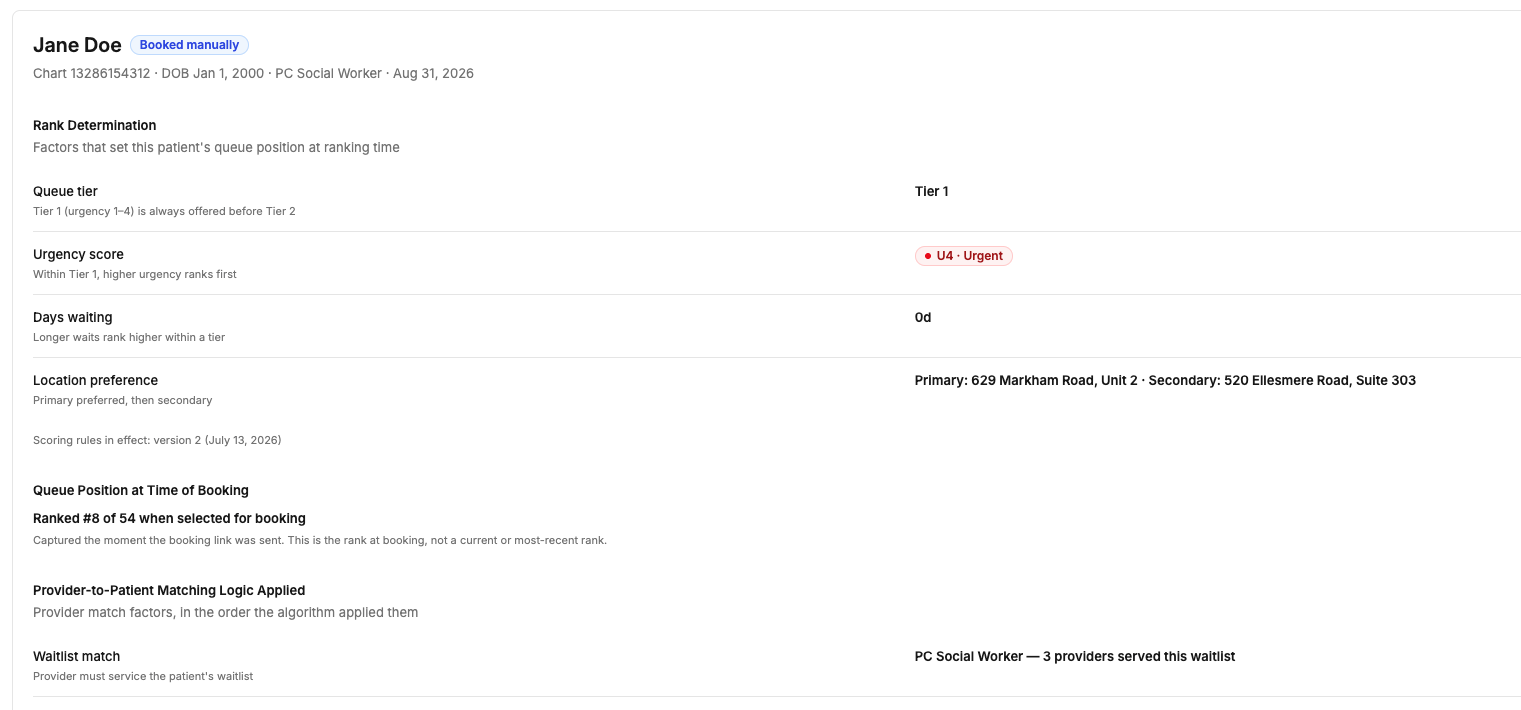
We developed workflow rules that map clients' responses about why they are requesting a service to the appropriate urgency score. When responses clearly indicate an urgency level, the platform automatically assigns the corresponding score. Ambiguous responses are flagged for clinical review and added to the waitlist with a Pending Triage status, allowing clinical staff to focus their attention on requests where additional assessment and judgment are needed, rather than manually reviewing every incoming request.
-
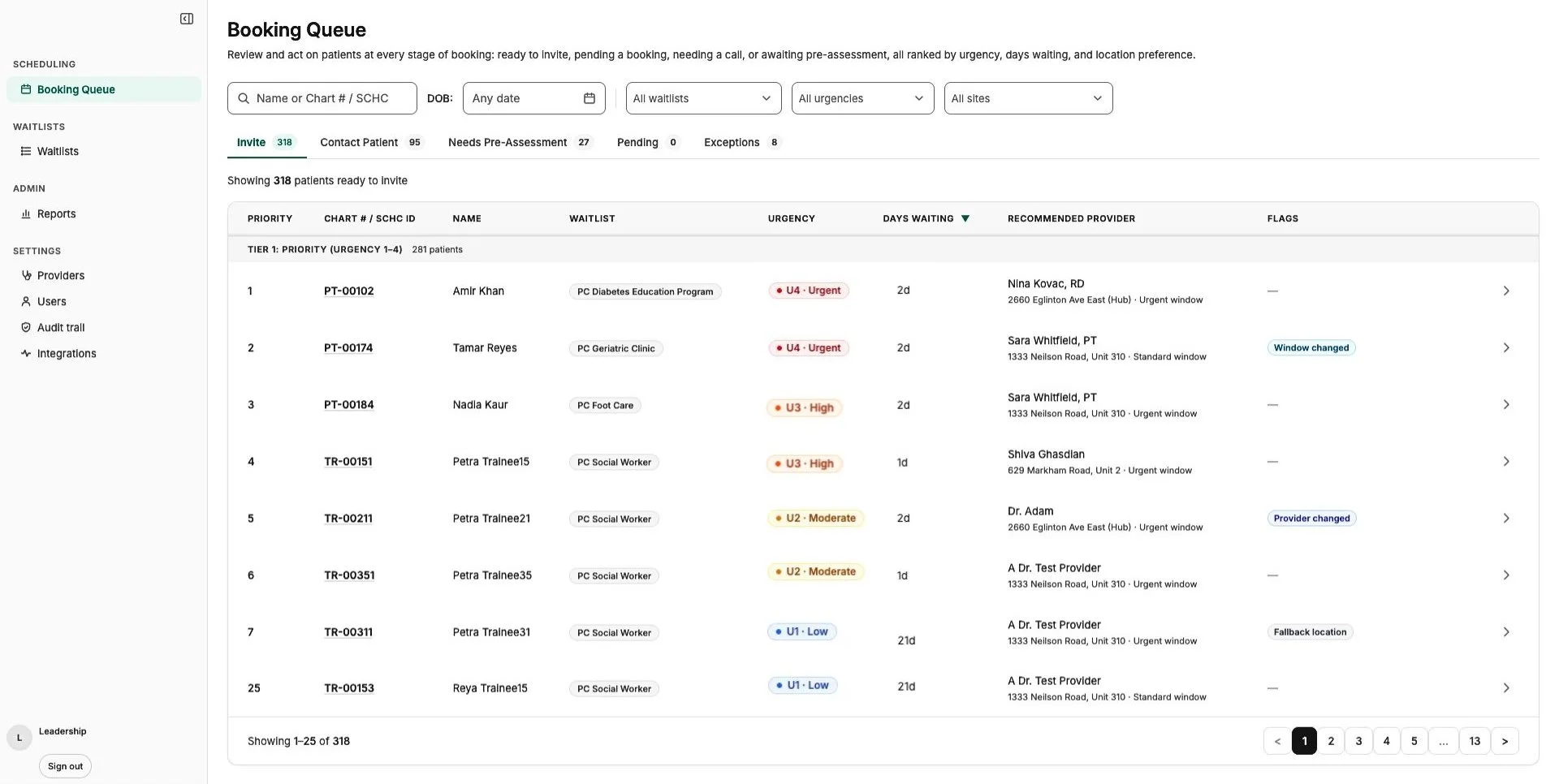
Rather than organizing patients solely by how long they have been waiting, the platform dynamically prioritizes waitlist entries using a combination of urgency score and days waiting. Waitlist statuses update automatically as patients' circumstances and waiting times progress, ensuring that patients with greater urgency are appropriately prioritized while accounting for how long others have been waiting. This provides staff with a more consistent and clinically informed view of which patients should be addressed next, while reducing the administrative effort involved in manually monitoring and updating waitlist entries.
-
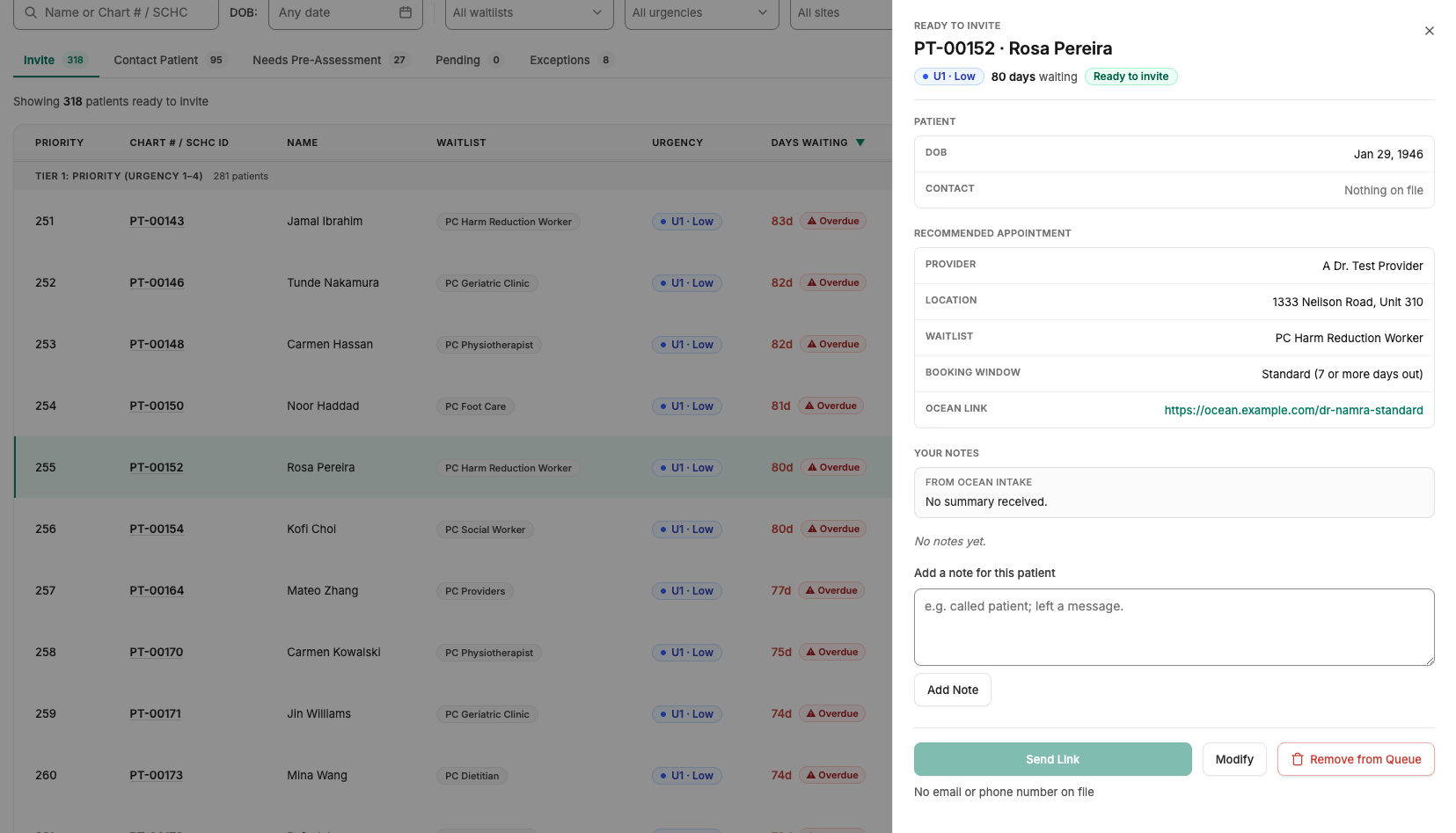
We developed a provider-matching workflow that identifies appropriate booking options as patients become eligible to book an appointment. The platform automatically recommends a provider based on whether they offer the required service, have availability within the patient's booking window, and work at the patient’s preferred clinic location. Staff can approve or modify the recommendation before proceeding with the booking invitation. This replaces the time-consuming process of manually searching provider schedules with an automated recommendation that keeps staff in control of the final decision.
-
The platform sends the patient an invitation to book their appointment directly online. Patients who book through their invitation are automatically removed from the waitlist. Automated reminders are sent at defined intervals if the patient does not book, reducing the need for staff to manually chase outstanding invitations. Those who do not book within the invitation window are moved into a dedicated Contact Patient workflow, where staff can track contact attempts and follow up manually, ensuring that patients who do not respond remain visible to staff rather than being lost in the process.
OutcomesThe waitlist optimization platform changed how SCHC manages incoming demand, allocates administrative effort, and coordinates access to care. Comparing April and September 2026 provides an early view of its operational impact.
Faster Access to Appointments
Average time from referral to appointment among patients booked to date fell from 65.1 days in April to 7.6 days in September, an 88% reduction. The improvement was observed across every program with comparable April and September samples.
Less Administrative Work
The new workflow reduced measured monthly staff time across three administrative tasks from 117.9 hours in April to 40.3 hours in September, a 66% reduction. The improvements came from three areas:
Central Intake: Estimated time spent following up on incomplete forms decreased by 27%, as the proportion of forms requiring follow-up fell from 60% to 20%.
Nursing: Time spent on patient triage decreased by 66%, from 67.3 to 23 hours.
Medical Secretaries: Time spent finding appropriate providers for bookings fell from 27.1 hours to zero through automated provider recommendations.
After adjusting for the higher volume of September requests, the estimated staff time saved was approximately 145 hours compared with processing the same demand using the previous workflow. This is equivalent to roughly 19 eight-hour workdays returned to the organization each month.
Higher Intake Volume, Better Information Quality
SCHC processed 439 intake requests in September, up 62% from 271 in April. Online requests through Ocean increased from 156 to 343, a 120% increase, while estimated fax referrals decreased from 108 to 85. At the same time, the estimated proportion of intake forms requiring follow-up fell from 60% to 20%. More complete submissions meant less time spent collecting missing information and a more consistent starting point for clinical assessment. Together, these changes demonstrate how standardized digital intake can help an organization manage increasing demand without a proportional increase in administrative workload.
A Foundation for Continuous Improvement
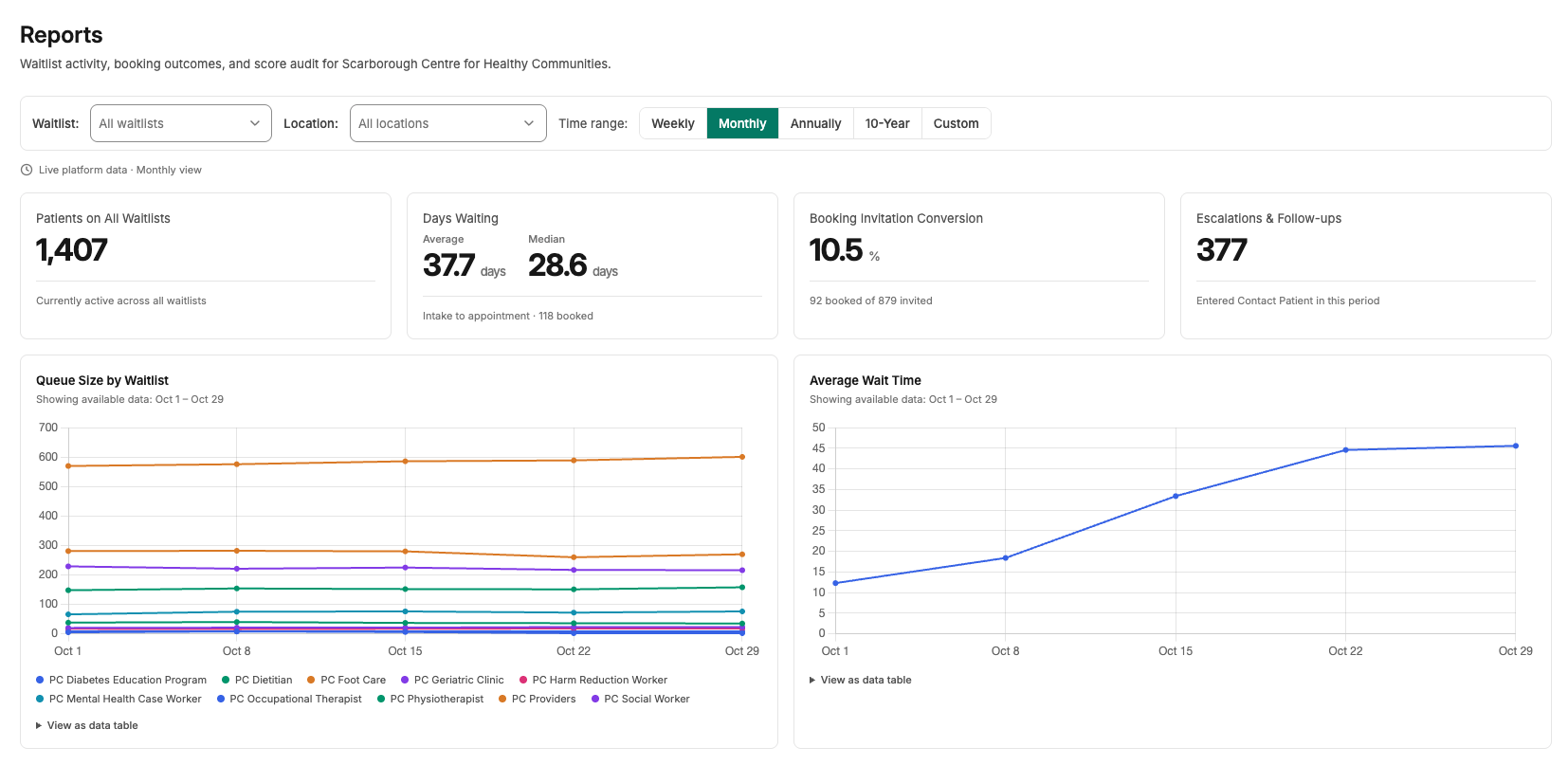
The platform was designed to evolve with SCHC's operational needs. Staff feedback informed additional functionality to improve coordination, reduce duplicate effort, and make follow-up more reliable. The implementation also established a foundation for continued optimization. SCHC is monitoring booking conversion, patient attendance, reminder effectiveness, and provider capacity utilization to identify further opportunities to improve access. These measures will help the organization distinguish improvements in processing efficiency from the broader challenge of ensuring that available appointments translate into attended visits.
“Primary Care Transformation has been a true team effort. It has taken countless decisions, creative problem-solving, and a shared commitment to improving care for our clients and communities. Boardroom Labs helped us have important conversations, think differently, and turn our vision into clear and practical plans. They helped build a stronger, more connected, and more sustainable primary care model at SCHC.”
- Chandra Roberts | Director of Community Health Teams | Scarborough Centre for Healthy Communities

You know something needs to change. Let's figure out what.
Two weeks. No cost, no obligation.